
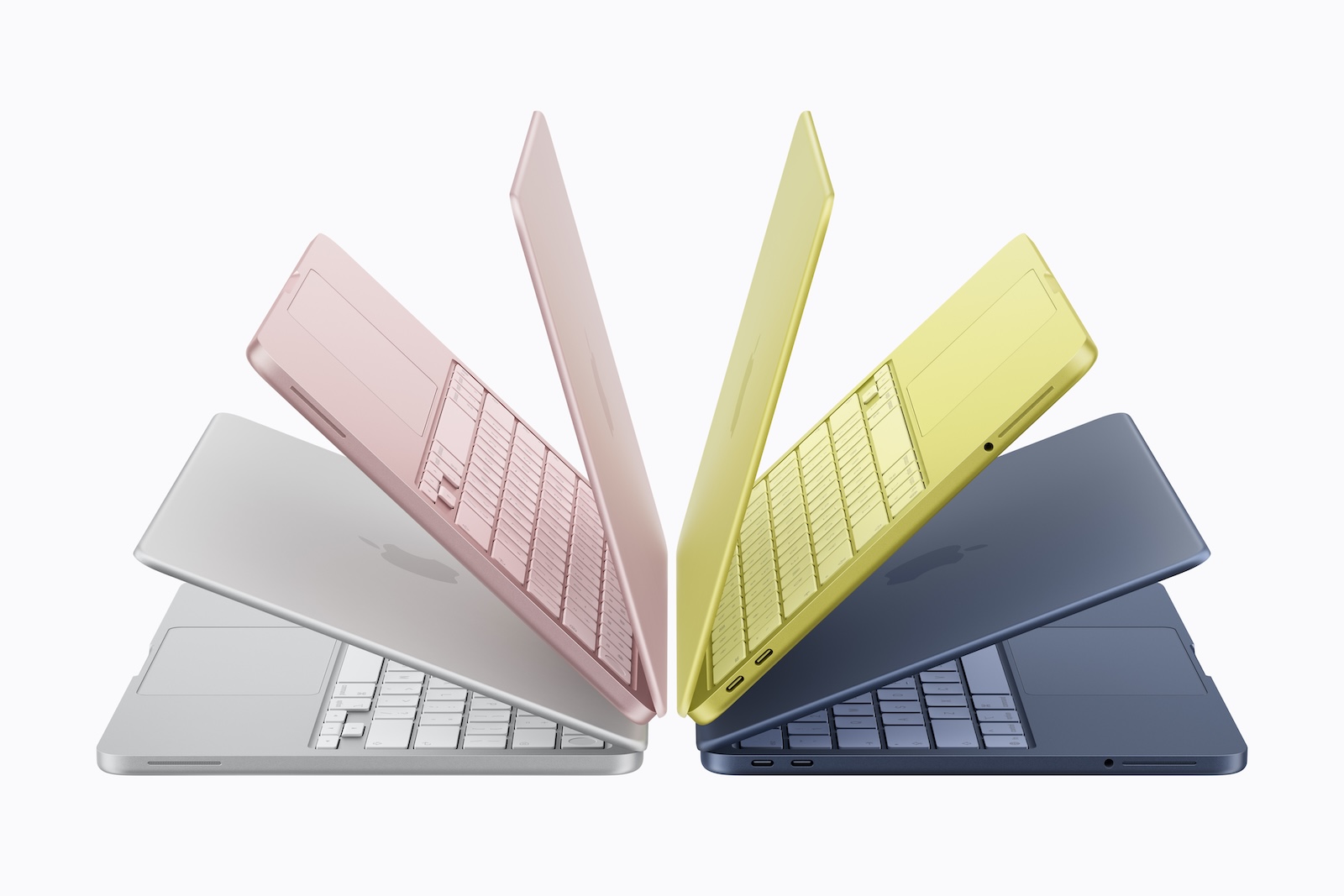
The MacBook Neo is an interesting laptop in Apple's line-up. It's affordable yet seemingly capable. And it's apparently selling so well that Apple might need to resume A 18 Pro production. It also gives us a hint of the versatility with Apple hardware—MacOS is able to run on an iPhone chip.
We already knew this—Apple had released the Developer Transition Kit when they announced the transition to Apple Silicon. It was a Mac Mini with an A12Z chip powering it. At the time we weren't even aware what Apple was going to call the chips inside Apple Silicon Macs so there was plenty of speculation that the chip inside Macs would be an iPhone chip. In November 2020 we learned the chips would be the M-series when the first three refreshed Macs were released—the MacBook Pro 13-inch, the MacBook Air and Mac Mini. Then something curious happened—the iPad Pro and iPad Air were refreshed in April 2021 with the same M1 chip from the Macs.
Logically if an M-series chip could go in an iPad, an A-series chip could go in a Mac. And the MacBook Neo proved this out. In replacing the discounted out-dated design MacBook Air (which only sold at Walmart), there was speculation that Apple would keep costs down by reusing previous case tooling, and many questioned why use an A-series chip when there are plenty of previous generation M-series chips. But likely not currently being manufactured. The release of the MacBook Neo raises new speculation—the A18 Pro chip, while not the newest, is still recent and likely the Neo uses binned chips that Apple might otherwise throw away. This is less a "parts bin special" as it is a recycling bin product, and even then Apple is able to build a computer (a laptop even) that easily outperforms the competition without dramatic sacrifices.
All that said, Apple is clearly willing to blur the lines between product lines while at the same time not causing market confusion. Recent discussions about what the folding iPhone will be (and what name it will be given) have again speculated on whether the product will be a hybrid. Old-school Apple customers might not see their phones as their primary computer, instead they prefer returning to their Mac when needing the bigger screen. At their core, every Apple OS is a variation of Mac OSX (and the original NeXT Step foundation) but the separation has been long enough that no one expects a merger. Except of course iPadOS has become more Mac-like. And much to the worry of Mac customers, MacOS has picked up some iPad like features. Just not touch. Yet.
When the folding iPhone is opened, what will be the operating system on the bigger screen, iOS or iPadOS? Apple had spent years telegraphing larger screens before they arrived and with the current design trends, and SwiftUI, developers shouldn't be rigidly building for one screen size or shape. We assume it won't be iOS because the shape of the screen suggests this, but also the assumption is what we expect to do with the bigger screen, that due to the ergonomics we'll hold the unfolded phone differently. And will it have an A-series chip, or an M-series CPU like some iPads? Will this mean it could be plugged into a monitor or TV, and connect to a keyboard? At that point, could it switch to MacOS? Technically it's possible even if it's far fetched.
Of course this is all speculation. Apple has a way of surprising us. The physical mockups hint at the shape but not the software or experience. The folding iPhone is not going to be cheap, and it's likely the target customer is someone with money. It's likely a vanilla iPhone and a MacBook Neo would together cost less than the folding iPhone. It's a halo product. And we know Apple likes to sell the whole ecosystem. The Neo could be affordable enough that iPhone-only customers might finally add a Mac to their lives. But if that still doesn't work, is it time for Apple to harness all the extra power and performance in the iPhone and make it more capable? It would certainly be nice to have one less device, not that we'd be stopped from owning multiple devices. Of course if developers would just release their pro apps for iPad this would be an easier solve. We have FinalCut Pro, where's Xcode for iPad, or Figma, or Visual Studio Code?
The use case makes sense—you're away from your Mac, and you need to do something (that nebulous desktop level task that just has to be done and can't wait—fixing code? Updating a design or editing a video?), all you have to do is unfold your phone, or plug it into a spare TV. And this whole time the interface, now a Mac, will be touch enabled. Of course we're still waiting for touch to be added to MacOS. Just as soon as they make every button, menu, and interaction big enough for the larger and less-accurate touch target.
The simplicity of Apple products is that they're capable but have a fairly narrow focus. While iMacs did ship with an infrared sensor and the Front Row app that turned the all-in-one into a streaming box, this is no longer possible—actually it is possible, the iPhone is the remote, and Apple doesn't pitch this feature. Why confuse customers? Touch is reserved for the glass, no you can't have the Pencil or touch on the Mac, forget coding on the iPhone.
Apple has had plenty of time to evolve MacOS to have the affordance for touch and yet it hasn't happened. We should be more concerned that liquid glass hints are layered transparent computing.