
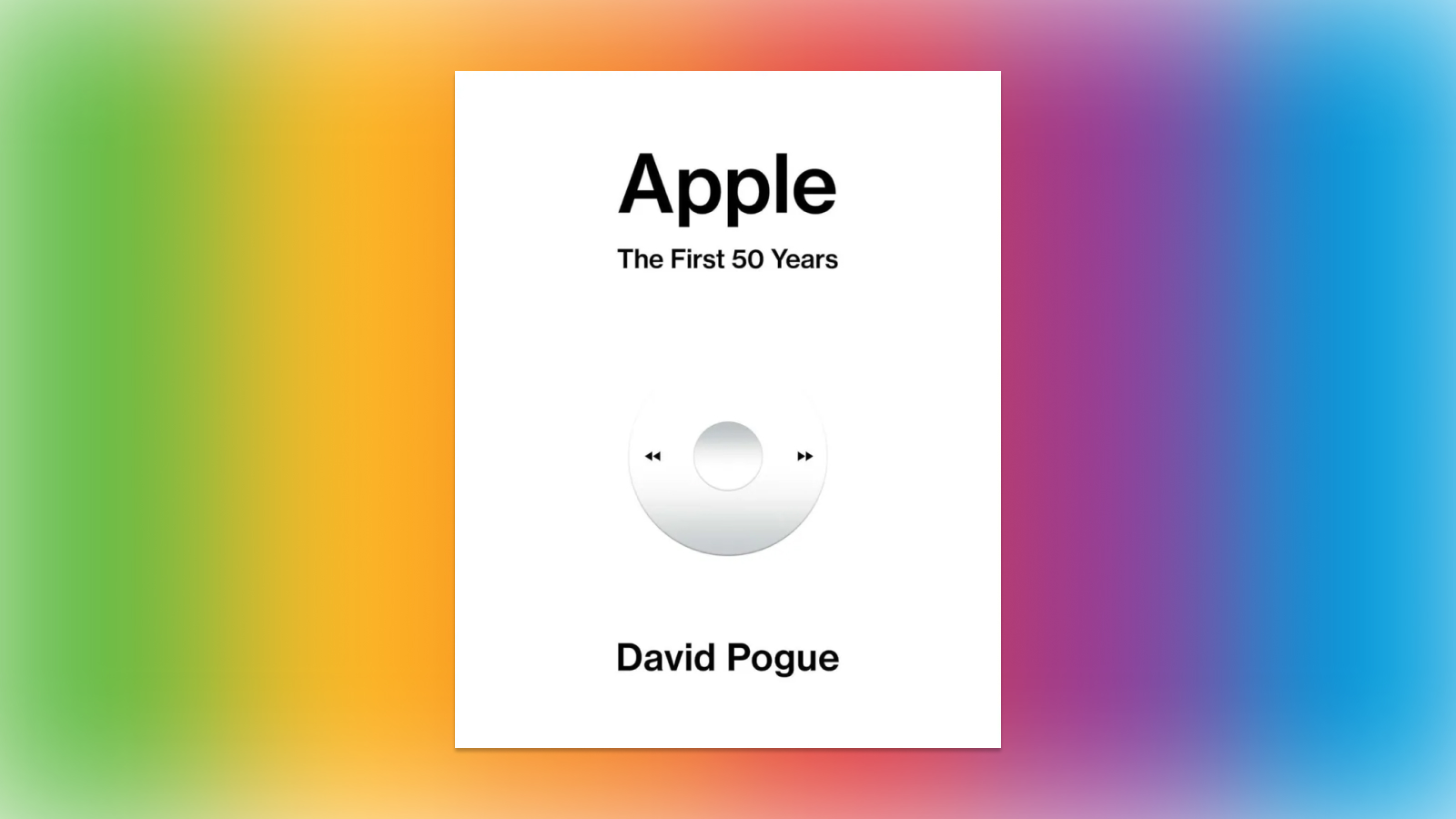
If you've been able to catch tech journalist David Pogue's appearances on almost every Apple related podcast then this review might end up being familiar. Buy the book. What else there to say?
Well the book isn't cheap. The Designed in California book was a lot more. And the classic "AppleDesign: The Work of the Apple Industrial Design Group" was pricey back in 1997. Apple: The First 50 Years is 600 full-colour pages in a compact size. Pogue joked at the Computer Museum event he hosted that people were buying the ebook and book so they could avoid damaging the physical, but the ebook version is not only pretty expensive, it's a substandard replacement. We're tempted to spring for the audiobook instead, after all it contains an easter egg—an email address where you can get sent some of the material cut from the published edition.
That's right, even at 600 pages, Pogue claims he wrote another 100 pages. So it sounds like you need to buy the book in three formats—or two if you skip the ebook.
There have been so many amazing (and not so amazing) books chronicling the history of Apple but usually the subject matter focuses almost exclusively on the Macintosh. Pogue also took the view that he needed to correct many of the myths that have persisted for years as each new book has quoted the mistakes from previous books.
Pogue also takes a new spin on some old facts, putting them in contemporary context. Take for example the nugget that Apple had invested in a small UK chip maker called ARM (formerly an Apple competitor called Acorn) in order to have access to their power-sipping chips for the Newton. Apple sold their stake around the time Steve Jobs returned to Apple, something that might have been seen as an action by the iCEO taken as he also killed off the Newton division. In reality, according to Pogue, Apple which was nearing bankruptcy and needed a cash infusion to buy Jobs' company NeXT. In a way Jobs was responsible for selling ARM, although Pogue claims that the sale ultimately saved Apple and therefore the Newton saved Apple. That logic is sound. Just don't estimate how much that stake would be worth today if Apple hadn't had to sell it early.